
How Much Does It Cost to Finish a Basement?
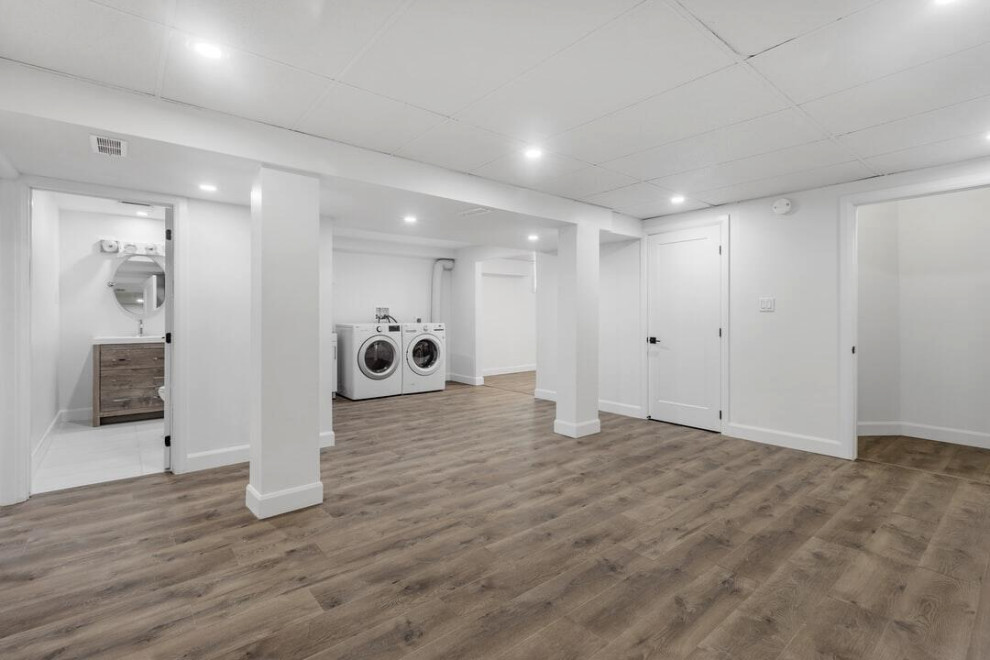
How much does it cost to finish a basement? Total costs typically range from $25,000 to $120,000, with most homeowners spending between $50,000 - $75,000 (per NAR Remodeling Impact Report, 2025). Where you land in that range depends on your basement's current condition, the systems involved, and how far you take the finishes.
In 2025, basements accounted for 48% of new single-family homes built within the Middle Atlantic region, according to the National Association of Home Builders. For the homeowners lucky enough to have one, that space often ends up storing holiday decorations, old furniture, and boxes that never quite make it back upstairs. It sits there, half-forgotten, doing nothing for your daily life or your home's value.
A finished basement changes that equation entirely, turning wasted square footage into an entertainment space your family will actually use.
How Much Does It Cost to Finish a Basement?
Total costs for a basement finish typically range from $25,000 to $120,000, with most homeowners spending between $50,000 - $75,000 (per NAR Remodeling Impact Report, 2025). That's a fairly wide range, and it exists because every basement starts from a different point. A bare concrete space with no wiring or plumbing costs quite a bit more to finish than one that already has some framing or electrical work in place.
Materials, permits, and labor make up most of that final number, and each piece can shift the total in a different direction. A small laundry-area basement with simple finishes lands near the low end, while a basement with a bathroom, custom lighting, and higher-end flooring pushes toward the top.
What Determines the Cost of Finishing a Basement?
Basement renovation costs shift based on size, current condition, and how many systems already exist below ground. A basement with existing drywall or wiring will typically cost less than one that starts as bare concrete and pipes. Moisture control often comes first, since skipping it can undo other work pretty quickly.
Electrical upgrades and plumbing lines add cost too, especially with a bathroom or wet bar in the plan. Insulation, framing, and drywall make up most of the basic structure, and flooring choices can swing the budget quite a bit on their own. A vinyl plank floor costs far less than a heated tile floor, for example.
Finish quality tends to be the biggest factor a homeowner controls. Finishing a basement counts as one of the more predictable home improvement projects once these factors are clear to a homeowner.
Several line items show up in nearly every basement project, and it helps to know them before getting quotes. Some of the biggest cost drivers include:
- Framing and drywall for new walls and ceilings
- Electrical wiring, outlets, and lighting fixtures
- Plumbing for a bathroom, wet bar, or laundry area
- Insulation to control temperature and moisture
- Flooring material and installation
- Waterproofing or drainage system upgrades
What Type of Basement Space Do You Want?
The purpose of a basement shapes its price about as much as the size does. A simple, open layout with standard materials usually lands on the lower end, while a bedroom or entertainment space pushes costs higher.
Basement design decisions made early on tend to save money later, since changing plans mid-project often means redoing finished work.
A budget-friendly finish keeps things fairly simple. Homeowners going this route often skip a bathroom, keep the layout open, and choose standard drywall with vinyl plank flooring. This approach still turns a basement into usable space, and it works as a solid starting point for a family room or home office.
Affordable basement finishes like this one tend to appeal to homeowners who want function first and extras later.
A basement bedroom or rental unit is a different project altogether. Local codes usually require an emergency exit, known as an egress window, along with more outlets and possibly a fire-rated door. Entertainment spaces, like a home theater or basement bar, bring their own costs too, with extra wiring, sound treatment, and custom cabinetry.
Permits, Code Requirements, and Moisture Control
Permits and codes rarely get much attention until they slow a project down. Most municipalities require a permit for electrical, plumbing, or structural changes, and skipping this step can create real problems when it's time to sell the home.
Inspection fees and permit costs vary quite a bit by location, so it helps to check with the local building department early.
Bedrooms need an egress window in almost every area, and ceiling height often has a minimum requirement too. Homes in Harford County and Northern Baltimore tend to be older, and older foundations sometimes come with drainage quirks that newer builds don't have. A contractor familiar with the local building history can usually spot these issues before they become expensive surprises.
Moisture is worth extra attention, honestly. Water finds the lowest point in a house, and that's almost always the basement floor.
A few common signs point to a moisture problem worth solving first:
- Musty smells that return after cleaning
- Visible cracks in the foundation walls
- White, chalky marks on concrete walls
- Standing water after heavy rain
Tips to Maximize Your Basement's Value
A basement remodel can boost a home's value, though the return depends on how well the contractor completes the work. Waterproofing before anything cosmetic tends to protect that investment better than any paint color or fixture choice. A flexible layout tends to appeal to more buyers down the road too, rather than a single, ultra-specific use.
Good lighting matters more in a basement than nearly any other room, since natural light is often limited or missing altogether. Recessed lighting, larger window wells, and light-colored walls all help a below-ground space feel less closed in.
Budget-friendly remodeling doesn't have to mean skipping these details, since lighting upgrades are relatively inexpensive compared to structural work.
Working with an experienced local build and design firm such as Ward Home Improvements, for example, lets homeowners work closely with a design team to create a personalized plan for the basement space. Our 2,800-square-foot showroom in Abingdon, the largest showroom in Harford County, allows our clients to see and feel the flooring, fixtures, hardware and cabinetry selections before committing to a final basement design. Seeing and touching materials ahead of time often prevents costly changes once a project is already underway.
Frequently Asked Questions
How Long Does It Take To Finish A Basement?
Most basement projects take somewhere between six and twelve weeks, though timing depends on the scope of work. A simple family room finishes faster than a project with a bathroom or bedroom addition.
Permit approval can add a few weeks before construction even starts, so it helps to plan ahead. Weather rarely affects timing much, since the work happens indoors.
Do All Basement Projects Need A Permit?
Most areas require a permit for electrical, plumbing, or structural changes, even in a basement. A simple paint job or new flooring over an existing subfloor usually doesn't need one.
Skipping a required permit can create problems later, especially when selling the home.
Will Finishing My Basement Raise My Property Taxes?
Adding finished square footage can raise a home's assessed value, which sometimes increases property taxes too. The exact impact varies by county and by how much new living space gets added.
A basement with a bathroom or kitchen tends to raise value more than a simple open room. Local tax assessors can give a homeowner a clearer answer before work begins.
Should I Hire A Professional Or Do Some Of The Work Myself?
Some homeowners handle small tasks, like painting or installing trim, on their own to save money. Electrical, plumbing, and framing work usually call for a licensed professional, since mistakes here get expensive fast.
A mixed approach can work well, with a contractor handling the technical parts. This keeps a project safer without giving up every cost-saving option.
Is There A Best Time Of Year To Finish A Basement?
Basement work happens indoors, so the season matters less than it does for outdoor projects. Fall and winter tend to be a bit slower for contractors, which can mean shorter wait times for scheduling.
Spring and summer often bring more demand, so booking early helps secure a preferred start date. Humidity levels can affect drying time for certain materials, though this rarely changes the overall timeline much.
Can I Finance A Basement Remodel?
Homeowners sometimes use a home equity loan, a personal loan, or a cash-out refinance to pay for a basement project. Ward Home Improvements does offer financing plans directly, which can spread the cost over several months.
Comparing interest rates across a few options usually pays off before signing anything. A basement remodel often costs enough that financing is worth considering, especially for larger projects.
Bringing Your Basement Vision to Life
Basement finishing costs come down to a handful of key factors: size, moisture control, electrical and plumbing needs, and the finish level you choose. Understanding these variables before you start is the best way to plan a realistic budget and avoid surprises.
So, how much does it cost to finish a basement that fits your family's needs? The answer depends on your goals, but you don't have to figure it out alone. Ward Home Improvements serves Harford, Howard, Carroll, Cecil Counties and Northern Baltimore homeowners with a team of professionals with decades of craftsmanship, and our 2,800-square-foot Abingdon showroom lets you see and feel every material before you make your final decision.
Call or email us for a free consultation today to get a personalized design and estimate for your space.
This is the article with formatted headings, images, and body text.